

- Challenges Faced by Traditional Drying Methods
- Product Overview
- Key Specifications
- Core Advantages of Vacuum Microwave Drying
- Typical Application Areas
- Additional Application Scenarios
- Flexible Power Customization
- Why Choose Pindom
- Conclusion
For manufacturers of honeycomb ceramics, silicon carbide ceramics, and ceramic membranes, the drying stage is consistently one of the most critical and sensitive parts of the production process. Uneven moisture removal often leads to product cracking, deformation, and inconsistent quality. Consequently, an increasing number of factories are integrating vacuum microwave technology into their production lines.
Challenges Faced by Traditional Drying Methods
Conventional hot-air drying typically presents the following issues:
- Long drying cycles
- High energy consumption
- Surface drying rates exceeding internal drying rates
- Temperature differentials leading to product deformation
- Rising labor costs
These issues become increasingly pronounced as production capacity demands grow. This is particularly true for thick-walled, porous, or complex-shaped ceramic green bodies. The “surface-to-core” heat transfer mode of hot-air drying easily creates a vapor pressure gradient within the material, which is a primary cause of cracking and deformation.
Product Overview
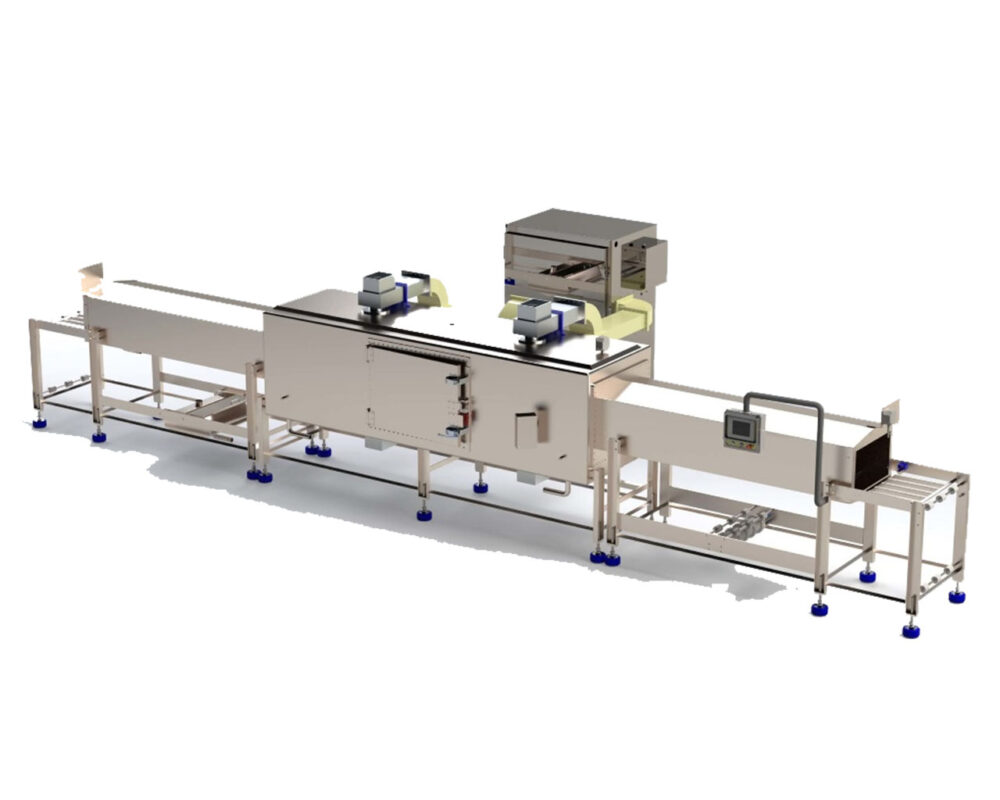
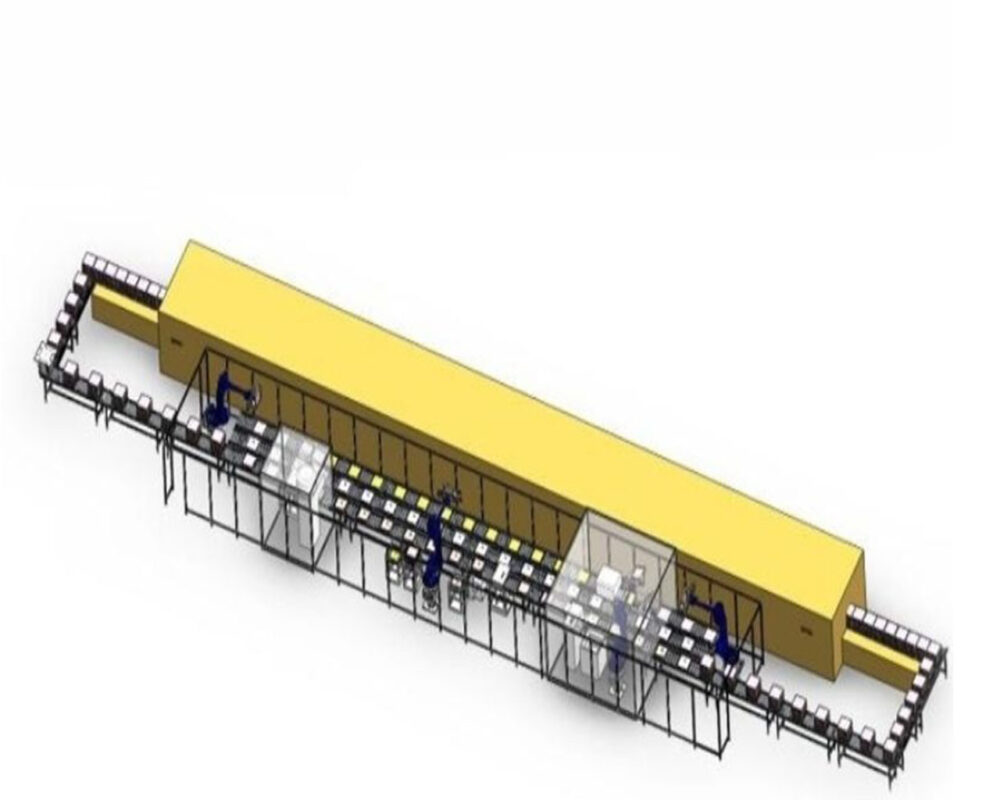
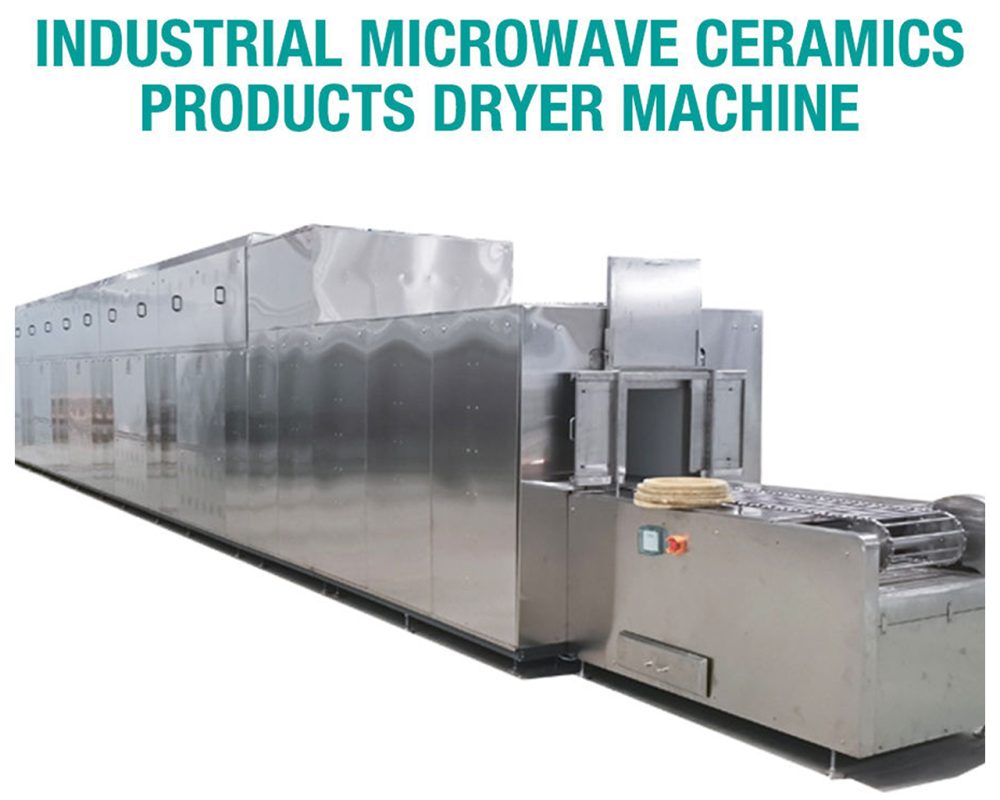
Pindom 20kW Large-Scale High-Temperature Vacuum Microwave Tunnel Dryer for Ceramics
Key Specifications
- Output Power: 10kW–500kW (customizable)
- Input Power: 10kW–500kW (customizable)
- Microwave Frequency: 2450MHz
- Core Functions: Drying, sterilization, expansion
- Technical Features: High efficiency and energy savings; supports on-demand customization
Core Advantages of Vacuum Microwave Drying
Unlike traditional external heat transfer methods, microwave energy penetrates the material, enabling uniform heating from the inside out. This “volumetric heating” mechanism allows water molecules within the material to directly absorb microwave energy and convert it into heat. This eliminates the slow heat transfer from surface to core that is characteristic of traditional conduction heating, thereby fundamentally removing temperature differentials between the interior and exterior. Under vacuum conditions, this process offers the following significant advantages:
- Rapid moisture evaporation at lower temperatures: Based on the saturation vapor pressure characteristics of water, a vacuum environment lowers the boiling point of water to the 40–60°C range, allowing vaporization at temperatures far below the atmospheric boiling point—making it particularly suitable for heat-sensitive green bodies.
- Balanced internal and external drying rates: The selective heating of water molecules by microwaves, combined with the vacuum-induced extraction of water vapor, significantly reduces the resistance to internal moisture migration and ensures a more uniform distribution of drying stresses.
- Effective reduction of material oxidation risk: The low oxygen partial pressure inhibits the oxidation of metal oxides or organic binders in ceramic raw materials at high temperatures, helping to preserve the material’s intrinsic properties.
- More stable and reliable product quality: The low-temperature, uniform, and controllable drying process drastically reduces micro-defects caused by the superposition of thermal and moisture stresses, providing a more consistent green body foundation for subsequent sintering.
This process is particularly well-suited for heat-sensitive materials or precision ceramic products requiring exceptional dimensional stability.
Typical Application Areas
Pindom equipment is widely used in the following fields:
Honeycomb Ceramics The uniform moisture removal mechanism helps reduce green body cracking and significantly improves the consistency of the carrier structure. Honeycomb ceramics feature thin walls, high cell density, and large specific surface areas. Traditional drying methods often cause channel deformation or wall micro-cracking due to rapid localized moisture loss. In contrast, the uniform volumetric heating provided by vacuum microwave technology effectively maintains channel geometric precision, ensuring uniform gas flow distribution after catalyst coating.
Silicon Carbide Ceramics The drying process allows for precise temperature control, which is crucial for ensuring high yields of valuable ceramic products. Silicon carbide green bodies possess high thermal conductivity but are brittle and highly sensitive to temperature gradients during drying. The low-temperature, uniform drying characteristics of vacuum microwave technology minimize residual stress accumulation and prevent latent damage to the green body prior to sintering.
Ceramic Membranes The vacuum environment effectively protects the microscopic pore structure and maintains the integrity of the membrane material. The functionality of ceramic membranes relies on the connectivity and pore size distribution of their nano/micro-scale channels. Atmospheric drying often subjects these channels to capillary forces that can cause collapse or uneven shrinkage. Conversely, vacuum conditions reduce liquid-phase surface tension, helping to preserve the original pore structure during dehydration.
Additional Application Scenarios
Beyond the three core applications mentioned above, Pindom’s vacuum-microwave tunnel drying equipment—characterized by low-temperature, uniform, and controllable processing—is also suitable for drying the following ceramic products:
Electronic Ceramic Substrates and Packaging Housings These products are typically thin and require high precision, often incorporating heat-sensitive metallization layers or organic binders. Low-temperature vacuum-microwave drying prevents the oxidation of metal layers or the carbonization of binders. Simultaneously, uniform volumetric heating effectively prevents substrate warping, ensuring alignment accuracy for subsequent surface-mount or packaging processes.
Bioceramics and Medical Implants Bioceramics such as hydroxyapatite and zirconia require strict control over porosity and surface morphology, while also necessitating the avoidance of high-temperature-induced phase transitions or the loss of bioactivity. Low-temperature drying in a vacuum environment removes forming additives while maximizing the preservation of the material’s biocompatible structure and surface micro-features.
Porous Thermal Insulation and Filtration Ceramics These products are characterized by high porosity, low density, and a large specific surface area. Traditional drying methods face long moisture migration paths and high resistance, making them prone to uneven drying that can reduce strength or damage the pore structure. The synergistic effect of vacuum and microwave technologies accelerates deep-seated moisture removal while maintaining the mechanical integrity of the structural framework.
Complex-Shaped and Composite Ceramic Components For ceramic parts featuring complex geometries—such as internal cavities, threads, or variable cross-sections—hot air struggles to cover all surfaces uniformly, and “dead zones” during drying can lead to localized defects. Microwave heating, which penetrates the material, is not limited by geometry. Combined with the uniform mass transfer provided by the vacuum environment, it enables simultaneous, whole-body drying of complex components.
The extended application scenarios above are derived from the equipment’s stated “drying” function and the “vacuum + microwave” technical principles. They remain within the scope of technical capabilities publicly disclosed on the Pindom official website and do not imply any changes to equipment configuration or parameters.
Flexible Power Customization
Production capacity requirements vary significantly across different factories. To address this, Pindom offers customized system options with a range of power specifications:
- 10kW
- 20kW
- 60kW
- 120kW
- Up to 500kW
This high level of flexibility enables customers to precisely match the equipment model to their actual production output.
Why Choose Pindom
Pindom focuses exclusively on the customized R&D and manufacturing of microwave drying equipment. Our core strengths include:
- A professional R&D team with over 10 years of experience in microwave applications
- In-house mechanical design capabilities
- A fully equipped, modern manufacturing facility
- Comprehensive ODM and OEM service support
- Prompt online technical support and after-sales service
- Proven experience serving industry-leading enterprises
Conclusion
For ceramic manufacturers seeking greater product quality consistency and lower operating costs, vacuum microwave drying technology offers significant advantages. Pindom’s customized tunnel drying equipment allows customers to flexibly configure power and capacity based on their specific needs, helping factories substantially boost production efficiency while ensuring superior product quality.