

- Why Is Thermal Control of the Magnetron Critical?
- Technical Insight: Why Is Water Cooling Necessary for High Power?
- A Closer Look at the E3400K’s Technical Specifications
- When Should You Choose a Water-Cooling Solution? Typical Application Scenarios
- Maintenance Perspective
- System Integration Advantages
- Conclusion
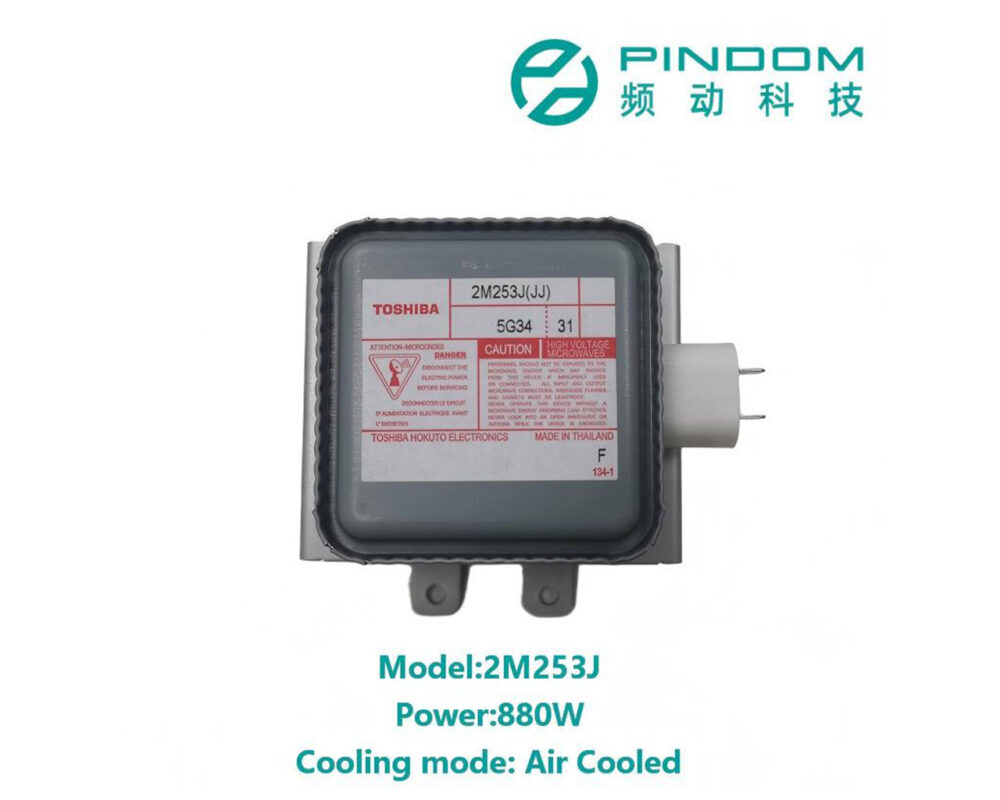
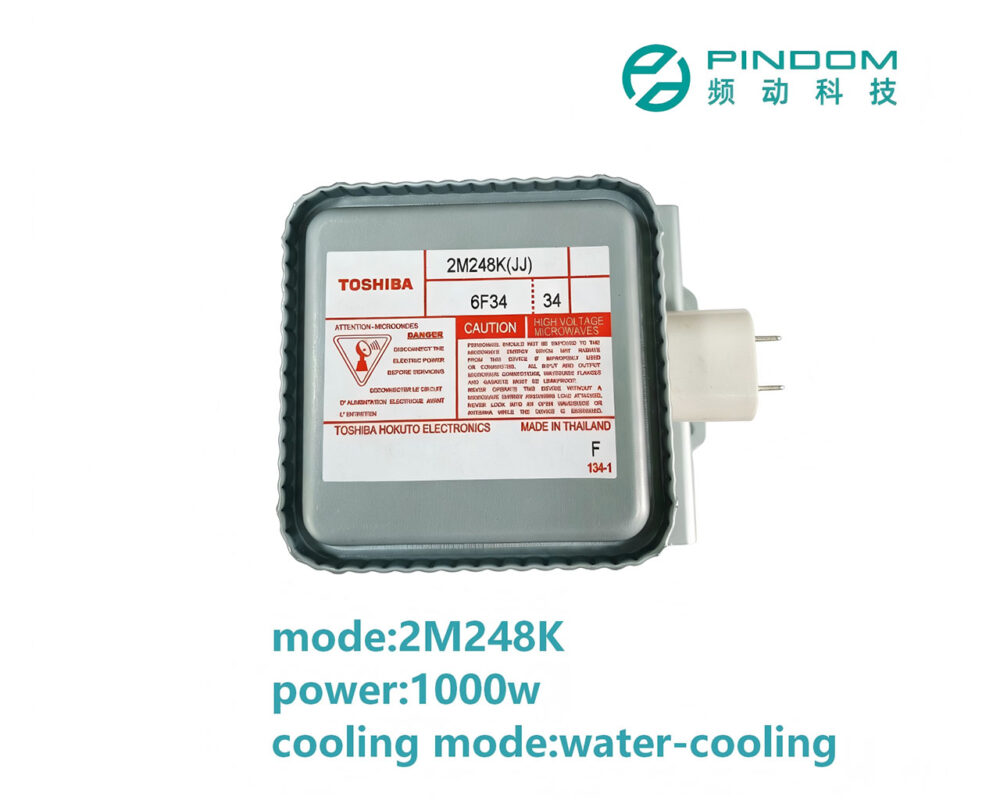
For microwave systems with low duty cycles, forced-air cooling is usually sufficient to meet heat dissipation needs. However, as equipment runtimes extend and thermal loads become continuous, traditional air cooling—limited by the low specific heat capacity of air—often struggles to handle sudden thermal spikes. In such cases, a water-cooling system becomes an essential safeguard. We specifically designed the Pindom E3400K 1300W water-cooled magnetron to handle these high-load operating conditions.
Why Is Thermal Control of the Magnetron Critical?
While generating microwave energy, the magnetron inevitably produces a significant amount of internal heat. If the cooling system is unstable, it triggers a chain reaction: output power drifts, frequency stability degrades significantly, and overheating drastically reduces the lifespan of core components. Particularly in systems designed for continuous operation, water-cooling systems maintain the equipment’s operating temperature far more precisely and effectively than traditional forced-air cooling.
Technical Insight: Why Is Water Cooling Necessary for High Power?
From a thermodynamic perspective, the thermal conductivity and specific heat capacity of liquids are far superior to those of air. During high-power continuous wave (CW) operation, the magnetron’s anode temperature rises sharply. Relying on air cooling generates excessive noise. It also risks anode material deformation from localized hot spots, which can lead to arcing or total magnetron failure. Water cooling circulates liquid to directly remove heat from core components, ensuring the tube remains within its optimal operating temperature range—a crucial factor for maintaining microwave output purity and long-term equipment reliability.
A Closer Look at the E3400K’s Technical Specifications
- Output Power: 1300W
- Frequency: 2450 MHz
This device is well-suited for a wide range of applications, including medium-sized drying systems, various industrial heating units, and continuous sterilization production lines. The 2450 MHz frequency offers excellent material penetration characteristics and remains the recognized standard in the field of industrial microwave heating.
When Should You Choose a Water-Cooling Solution? Typical Application Scenarios
The E3400K is perfectly suited for the following demanding production environments requiring long-term, continuous operation:
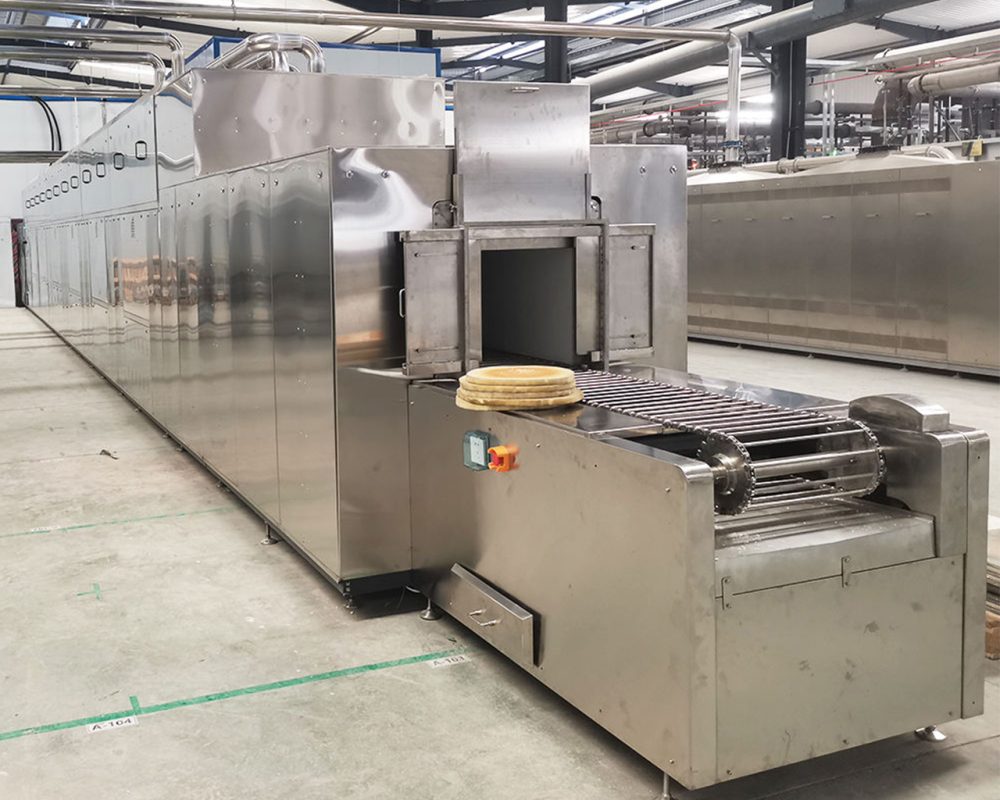
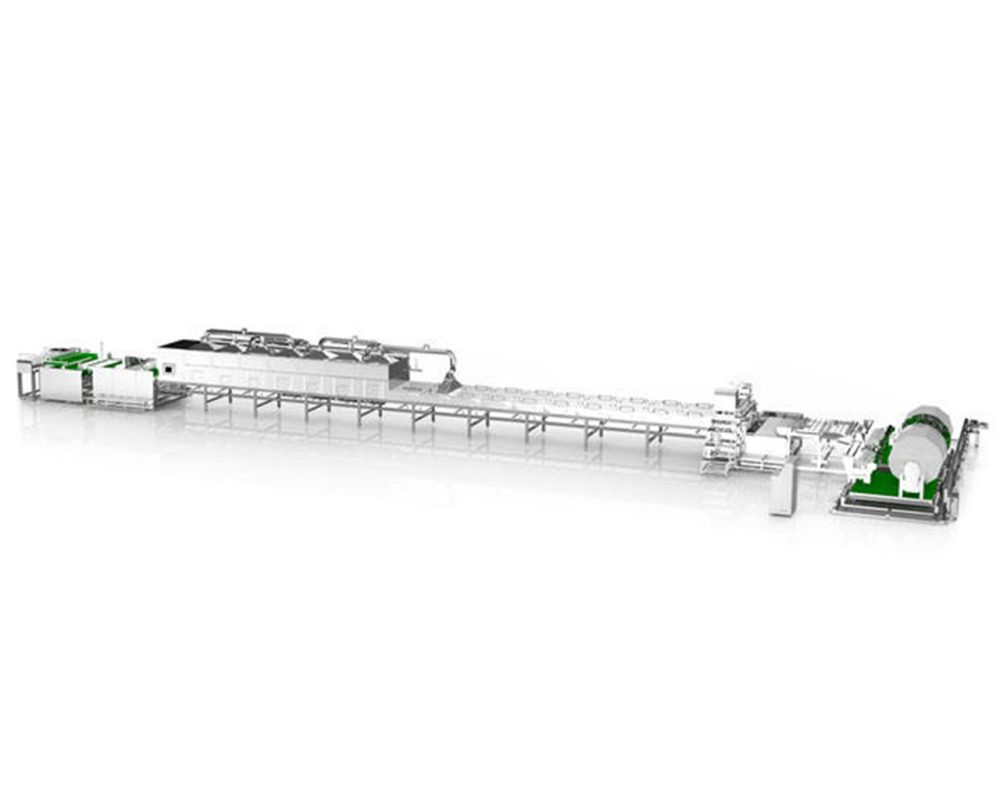
- Continuous Food Processing and Sterilization: In large-scale food processing plants—such as for the continuous drying and dehydration of puffed snacks, or the high-temperature sterilization of sauces and ready-made meals on assembly lines—equipment must operate uninterrupted 24 hours a day while ensuring uniform heating across every batch. The water-cooling solution effectively prevents issues like incomplete sterilization caused by equipment throttling due to overheating.
- Chemical Material Drying and Curing: Applications include the deep drying of lithium-ion battery cathode and anode materials, as well as the rapid curing of chemical powders and ceramic green bodies. These processes involve massive moisture evaporation and extremely high thermal loads. Thanks to stable water cooling, the E3400K maintains a continuous 1300W full-power output. This stability significantly boosts production line capacity.
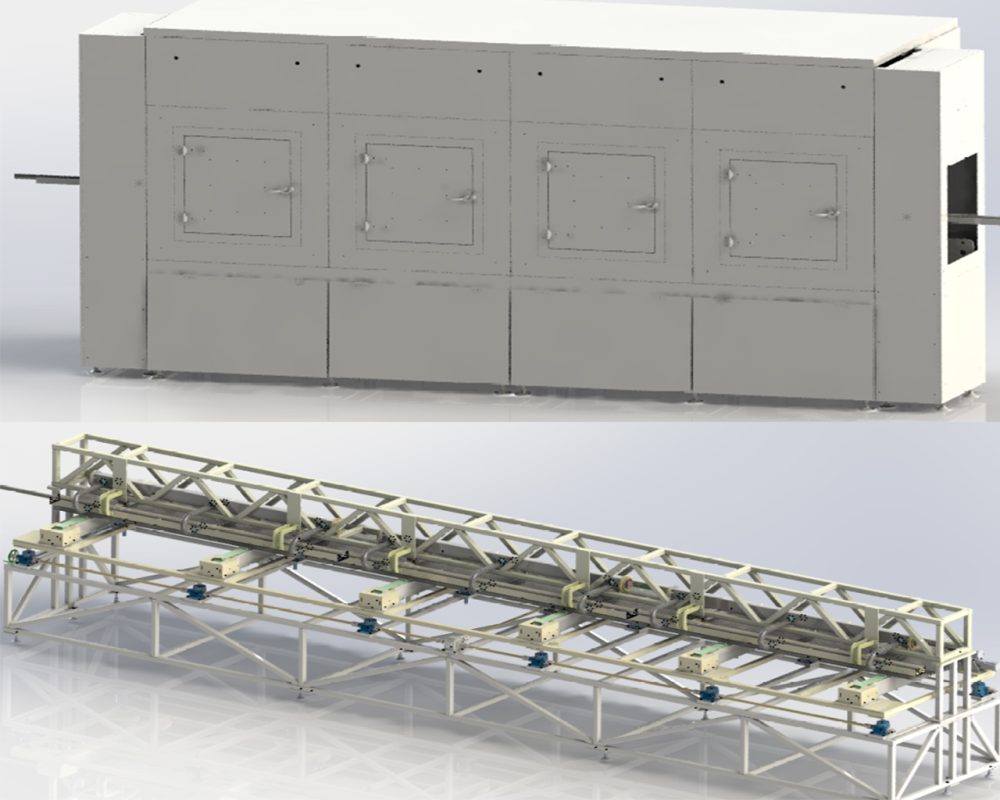
- Industrial Long-Cycle Heating Systems: Examples include rubber vulcanization preheating and wood pest/decay treatment. In these scenarios, microwave generators are often integrated into enclosed or semi-enclosed tunnel ovens where ambient temperatures are naturally high, rendering air-cooling systems prone to failure. In contrast, the water-cooling system operates independently of harsh external conditions, maintaining optimal operating temperatures for core components.
Maintenance Perspective
Stable thermal control effectively reduces thermal stress on surrounding components—a key advantage of the water-cooling solution. In practice, maintenance personnel observe a noticeable reduction in unexpected equipment downtime, more stable and uniform heating performance, and a significant decrease in the frequency of core component replacements.
System Integration Advantages
The E3400K was designed with compatibility as a priority, aiming for seamless integration with various industrial microwave generators and power supply systems in existing production environments. For equipment manufacturers, this high level of compatibility greatly simplifies system matching and future maintenance planning.
Conclusion
In summary, the Pindom E3400K water-cooled magnetron is the ideal choice for production environments where microwave systems require continuous operation and thermal stability directly determines the quality of the final process.